Everyday wellbeing
How to start working out at home with no equipment
A clear, practical guide for beginners: start a home workout routine with no equipment, fit it into your week, and refuel easily after.
Vitaflix editorial team
5 min read
Getting started with home workouts can feel overwhelming, especially if you don’t have any equipment or much space. The good news: you don’t need a gym or fancy gear to move your body, feel stronger, and boost your energy.
With a few practical steps, you can build a home workout routine that fits your real life—even in a small space and on your busiest days. Here’s how to begin, with a simple exercise plan and easy meal ideas for after your workout.
How to start working out at home with no equipment
All you need to begin is a little space and your own bodyweight. Start with basic moves that use your body as resistance—think squats, wall push-ups, and gentle core exercises. It helps to pick a regular time in your day, like right after you wake up or before dinner, and keep each session short (10–20 minutes is enough to get benefits).
If you’re new or returning after a break, start with just two or three sessions a week. Always check with your doctor before starting a new routine if you have a health condition, are pregnant, or have pain. Go at your own pace.
Why home workouts work for real life (and real weeks)
Home workouts are flexible and forgiving. You can fit them in whenever you have a pocket of time—no commute needed. There’s no pressure to keep up with anyone else, and you can adapt the routine to your mood, energy, and schedule. On busy days, even a short session counts.
If you want to add more movement to your week, consider mixing in walks, which are easy to start and gentle on your body. See How to start walking more when your week is busy and you feel tired for practical tips.
Choosing the right space and time (even if it’s small and busy)
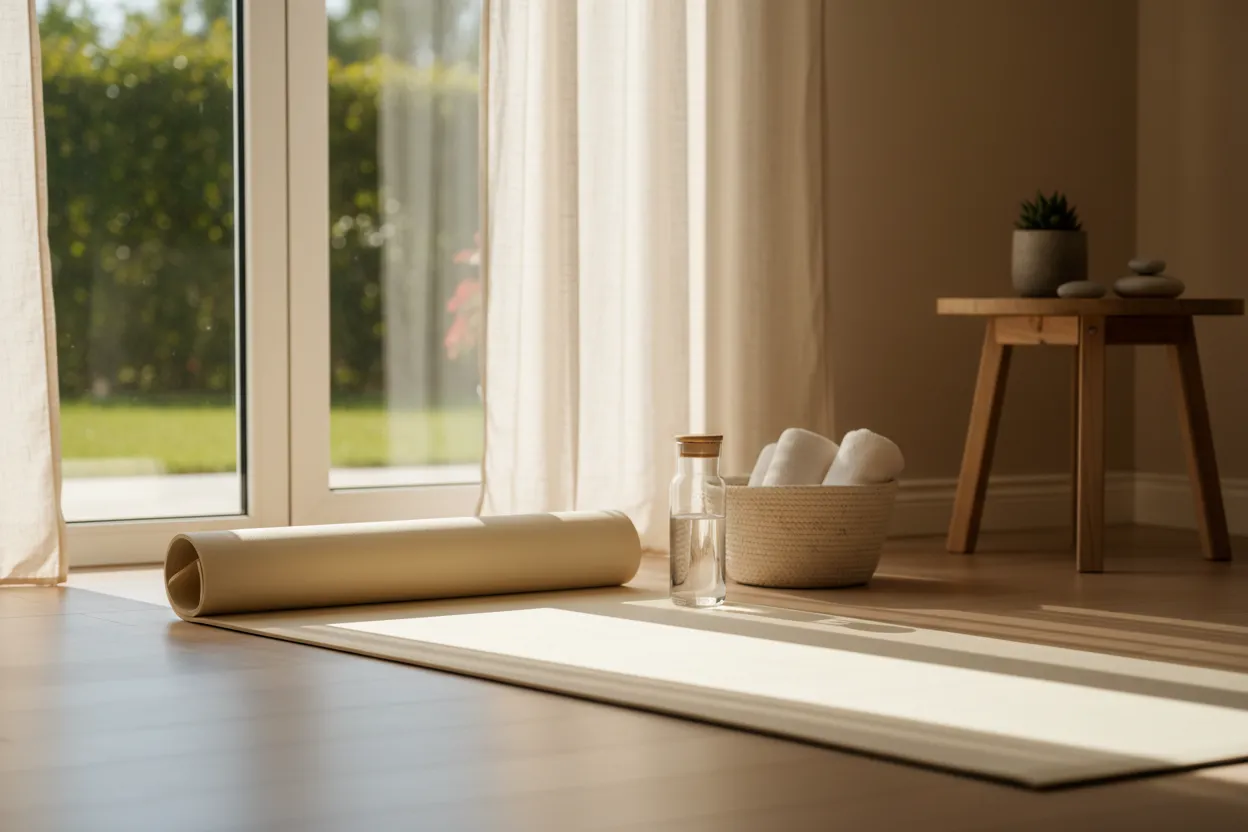
You don’t need a dedicated gym room. Any spot where you can stretch your arms out to the side and move comfortably will do—a corner of the living room, a hallway, or beside your bed. Lay down a mat or towel for comfort.
Pick a time that works for you. Morning can help you start your day with energy, but evenings work just as well if that’s when you’re free. Try adding your workout to your calendar or to-do list, and treat it like any other important appointment.
A simple bodyweight workout to try (with how-to for each move)
Here’s a basic routine you can do in about 15 minutes. No equipment needed. Do each exercise for 30 seconds, rest for 30 seconds, then move to the next. Repeat the whole circuit 2–3 times.
| Move | How to do it |
|---|---|
| Bodyweight squats | Stand with feet hip-width apart, bend knees and lower hips as if sitting into a chair, then return to standing. |
| Wall push-ups | Place hands on a wall at chest height, step back, and lower your chest toward the wall, then push back. |
| Standing knee lifts | Stand tall, lift one knee toward your chest, lower it, then switch sides. Alternate legs. |
| Seated chair dips | Sit on a sturdy chair, place hands beside hips, slide hips forward off the seat, lower gently, then press up. |
| Standing side reaches | Stand, reach both arms overhead, lean gently to one side, return to center, then lean to the other side. |
Start gently and focus on how your body feels during each movement. If you’re unsure about your form, look for simple video demonstrations or ask a qualified professional for guidance.
How to keep it up: routines, progress, and rest days
Routine helps build consistency. Try penciling in your workouts on set days—say, Monday, Wednesday, and Friday. Over time, you can increase the number of rounds, add new moves, or lengthen each session, but there’s no rush. Celebrate the small wins, like finishing a session on a tough day.
Rest days matter. Your body needs time to recover and get stronger. Listen to your energy levels and take breaks when needed. If you miss a day, pick up again the next time—flexibility makes routines last longer, as we explain in Why a flexible food routine is easier to live with.
Refueling after a workout: easy meal ideas
After exercise, it’s helpful to eat a meal or snack that includes protein and some carbs, to support your energy and recovery. Here are a few options you can make quickly:
- Protein Oatmeal with Banana and Peanut Butter: 309 kcal, ready in 12 minutes, with rolled oats, skimmed milk, whey protein, banana, and peanut butter.
- Creamy hake curry: 396 kcal, 20 minutes, with rice, hake, cherry tomatoes, bell pepper, yogurt, lemon juice, and spices.
- Velvety chayote and broccoli cream: 98 kcal, 30 minutes, with chickpeas, broccoli, chayote, onion, garlic, olive oil, and spices.
Choose meals that you enjoy and that fit your routine. If you’re unsure what’s right for you, consider speaking with a registered dietitian.
Starting a home workout routine is about making movement part of your week, not about perfection. Vitaflix makes it easier by helping you plan balanced meals in the right portions, organize your shopping, and record your workouts and walks—so you can track your progress and feel good about every step.
Frequently asked questions
What if I don’t have much space to exercise at home?
You can do most bodyweight exercises in a small area—just enough to stretch your arms and move freely. Even a corner of a room or beside your bed works. Use a mat or towel for comfort, and move furniture if needed to create a little more space.
How long should a beginner home workout be?
A beginner home workout can be as short as 10 to 20 minutes. Focus on quality rather than length. Consistency matters most, so short, regular sessions are more effective than occasional long ones. Adjust the time to fit your schedule and energy.
Do I need to warm up and cool down?
Yes, a gentle warm-up helps prepare your body for movement and can reduce stiffness. Try light marching in place or arm circles for a few minutes. After your workout, cool down with gentle stretching and deep breaths to help your body relax.
How do I know if I’m doing exercises correctly?
Start with simple, controlled movements and focus on how your body feels. If you’re unsure, look for basic video demonstrations from reliable sources or ask a fitness professional for guidance. Stop if you feel pain, and check with a doctor if you have concerns.
What should I eat after a home workout?
After exercise, aim for a meal or snack that includes protein and some carbohydrates. This helps refuel your energy and supports recovery. For example, try oatmeal with banana and peanut butter, or a balanced meal with rice and fish.
How can I stay motivated to work out at home?
Make your routine simple and realistic, and celebrate small wins. Scheduling workouts, tracking your progress, or joining a supportive community can help. Remember, every session counts—progress happens over time, not all at once.